
The Hidden Cost of Poor Deliverability: How AI Protects Marketing Pipeline and ROI

How Temporary Email Blocking Safeguards Your Marketing Email Pipeline and ROI
Every marketing team has felt the sting of a campaign that looked strong on paper but underperformed in the inbox. You hit send, watch the open rate climb slowly, and try not to think about the thousands of addresses that bounced or simply never engaged. The hidden culprit is often temporary email addresses. In this deep dive, I’ll explain why temporary email blocking is now a core part of deliverability protection, how AI-powered verification fits into your marketing email pipeline, and how the right implementation can protect both your sender reputation and your revenue.
The Hidden Cost of Poor Deliverability: Why Pipeline Health Matters
Before jumping into temporary email blocking, it helps to understand what deliverability actually means. Too many teams treat “delivered” as the finish line. In practice, deliverability is only the beginning of a much more fragile process.
What Deliverability Really Measures

Email delivery and email deliverability are not the same thing. Delivery means the receiving server accepted your message. Deliverability means that message reached the inbox, stayed there, and caught the recipient’s attention. That distinction matters because mailbox providers now make deliverability decisions based on engagement signals, not just infrastructure setup.
A healthy sender reputation is built on consistent, positive interactions. When people open your emails, reply, or move them to a folder, the provider sees those signals as proof that you’re a legitimate sender. When people delete your messages, mark them as spam, or never open them, your reputation takes a hit.
Temporary email addresses poison this system from the inside. They create hard bounces and soft bounces, they generate spam complaints, and they drag down every engagement metric you track. Over time, this can push even well-crafted campaigns into the promotions tab or the spam folder.
How Bounce Rates and Spam Complaints Quietly Raise Costs
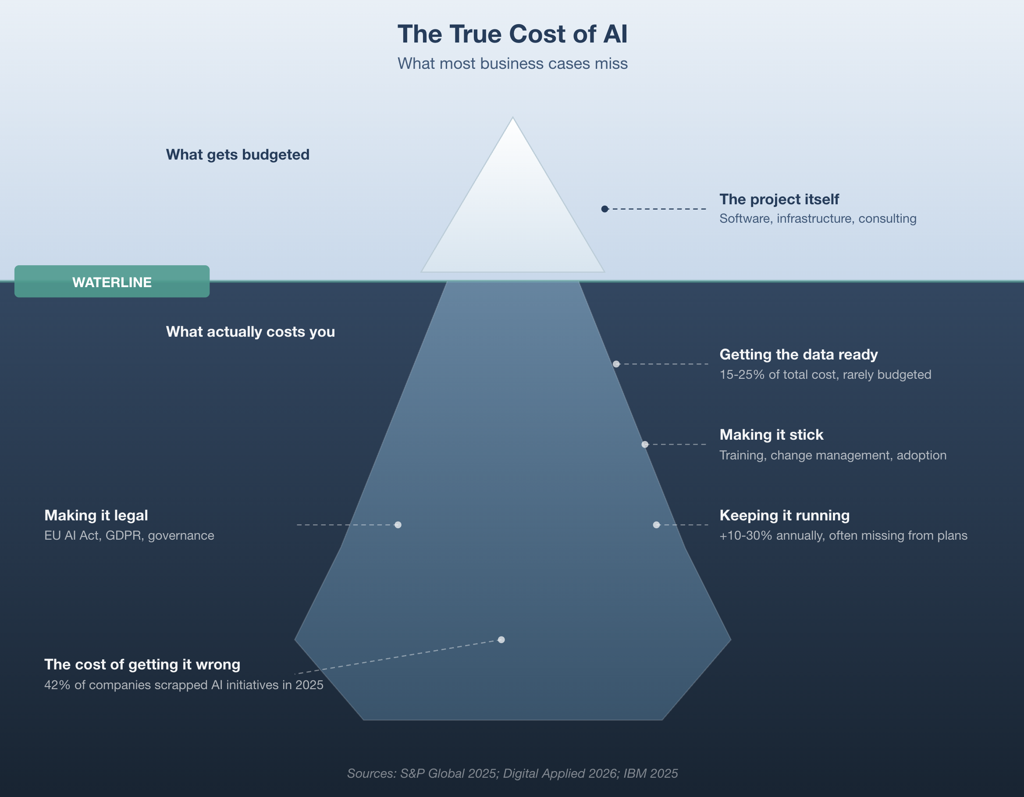
Bounces are not just a reporting annoyance. Every bounce has a direct and indirect cost.
Directly, you’re paying your email service provider for sends that can never convert. If you send to a list with 100,000 addresses and 5% are temporary or invalid, that’s 5,000 wasted sends. Multiply that by ten campaigns per month, and you’re losing 50,000 send opportunities every month. Those costs add up quickly, especially on volume-based pricing tiers.
Indirectly, bounces and spam complaints damage the very thing that determines your future inbox placement: your sender score. A single high-bounce campaign can increase your spam complaint rate, lower your open rate, and make the next campaign more expensive to land. Unlike a one-time budget hit, this problem compounds. It affects your domain reputation, your IP warm-up, and even the marketing emails your team sends to engaged customers.
What’s often overlooked is the analytics side. Bounces and spam complaints skew campaign performance data. If your open rate drops because a large portion of your list is fake, you might conclude that your subject line was weak. You then turn the creative upside down, when the real problem was data quality. In my experience, this is why deliverability problems are so dangerous: they lead marketing teams to make the wrong decisions with even the best tools.
The Opportunity Cost of Emails That Never Reach the Inbox
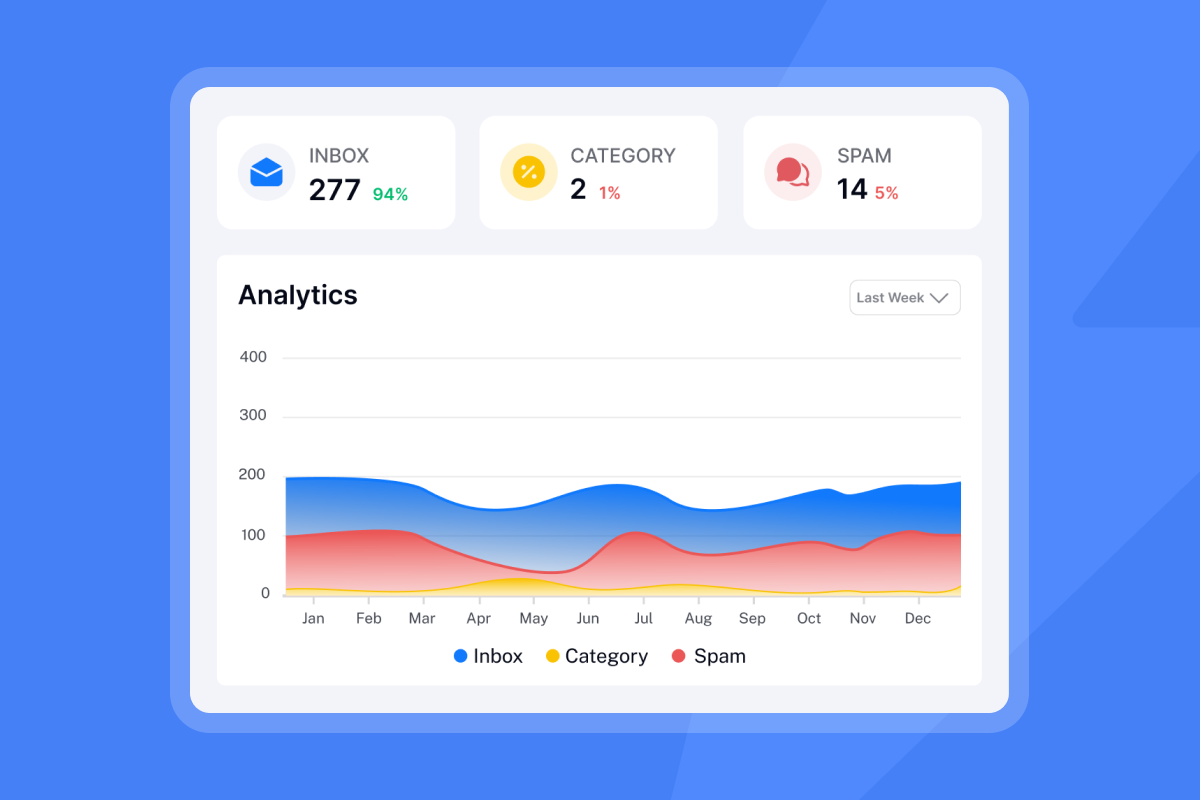
There is also a quieter, more painful cost: the email that never arrives. For lead generation, a temporary email means a potential sales conversation never starts. For product-led growth, it means a free trial invitation never lands. For customer retention, it means an onboarding sequence breaks before the user ever sees your product.
That’s the opportunity cost of poor deliverability. Leads that never see your offer, sales sequences that stall, and pipeline stages that stay empty while your team wonders why conversion is dropping. Temporary email blocking is not just a hygiene practice; it is a revenue protection strategy.
Temporary Emails: A Silent Threat to Marketing ROI
Temporary email addresses are easy to ignore because they don’t always make a lot of noise. They’re not malicious, and they don’t damage your systems directly. But they quietly drain the value from every campaign.
Why Temporary Emails Are Difficult to Detect
The first challenge is detection. Temporary email services are designed to produce addresses that look completely normal. They often use real-looking domains, valid syntax, and even valid MX records. A basic regex pattern or format check cannot distinguish a disposable address from a legitimate one.
What makes this harder is the scale of temporary email providers. New domains appear constantly, and old ones are retired. Blocklists become outdated within weeks. A temporary email address that works today may not exist tomorrow, but by then it has already entered your database and been used to gate a whitepaper or free trial.
Temporary emails also mimic human behavior at the moment of signup. They may include a plausible first name, a random number, and a common domain suffix. Without advanced pattern recognition, there is no reliable way to flag them purely by looking at the string. This is why static validation methods fail and why AI has become necessary.
The Data-Quality Snowball Effect on Campaign Analytics
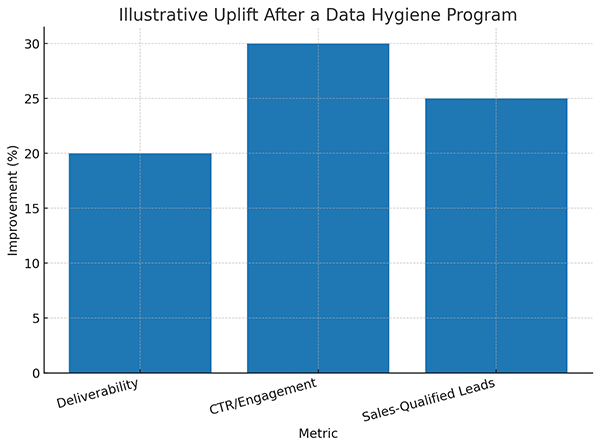
One temporary email address might seem harmless. In isolation, it costs you a single send. But the real damage comes from the data-quality snowball effect.
When a temporary email enters your CRM, it contaminates more than just one field. It affects lead scoring, because the fake lead may download content or click a link. It affects retargeting, because advertising pixels now associate behavior with a junk identifier. It affects reporting, because your marketing automation system records opens and clicks that don’t mean anything.
Over time, your team starts to lose confidence in the data. Sales reps waste time calling numbers that don’t exist. Marketing leaders question whether the channel is working. Analysts build models that include noise instead of signal. Every downstream decision becomes a little less trustworthy, and that erosion is hard to reverse.
Temporary Email Blocking ROI: Why One-Time Filters Aren't Enough

Some teams attempt to solve this with a one-time cleanup. They buy a list-scrubbing tool, clean out obvious disposable domains, and move on. That approach is useful, but it is not enough.
Temporary email blocking has to be a continuous risk-reduction strategy. New temporary addresses are created every day, and your signup form is always exposed. A one-time filter only handles the addresses that were already in your system. It does nothing to protect the new leads entering your pipeline tomorrow.
That’s why modern temporary email blocking uses AI-powered verification at the point of capture. Instead of a static blocklist, you get a real-time decision that evaluates risk based on patterns, behavior, and domain reputation. With AntiTemp’s approach, for example, each address receives an explainable risk score, so you can decide how aggressive to be without losing legitimate signups.
How AI Email Deliverability Protects Your Marketing Email Pipeline and ROI

Traditional validation methods are struggling to keep up. AI email deliverability offers a way to identify temporary emails before they enter your pipeline, without adding friction to the signup experience.
What Makes AI-Powered Verification Smarter Than Regular Checks
Legacy methods rely on syntax checks, known disposable domain lists, and simple SMTP pings. These methods have value, but they are brittle. Disposable email providers rotate domains, SMTP servers do not always respond honestly, and regex patterns miss the more sophisticated tricks used to evade detection.
AI-based verification looks at a much wider set of signals. It evaluates address patterns, domain age, email provider behavior, historical risk scores, and the context of the signup. Instead of a binary accept or reject, it produces a risk score that reflects how likely the address is to be temporary, invalid, or risky.
This matters for marketers because risk is rarely black and white. A brand-new domain from a foreign country might be suspicious for one campaign but perfectly acceptable for another. AI handles that nuance by learning from data, not from static rules.
Key Capabilities of AI Email Deliverability: Explainable Risk Scores, Real-Time API, and Batch Processing
When evaluating an AI email verification tool, there are three capabilities you should look for.
First, explainable risk scores. A simple “valid” or “invalid” label is not enough. You need to know why an address was flagged. AntiTemp provides risk scores that are transparent and auditable, which makes it easier for marketing operations teams to trust the workflow and adjust thresholds.
Second, a real-time API. Temporary email blocking works best at the moment of signup. If your verification tool takes several seconds to respond, you risk losing legitimate users. AntiTemp’s API is designed to return results in under 500 milliseconds, making it possible to verify inline without adding friction.
Third, batch processing. Not every verification happens at the point of capture. Sometimes you need to clean an existing list before a campaign, a data migration, or a seasonal send. AntiTemp supports both real-time API checks and batch processing, so you can protect your pipeline at every stage.
How to Reduce Bounce Rate with AI-Powered Verification Without Slowing Lead Capture
A common fear is that verification adds too much friction to the lead capture flow. In practice, the opposite is true. When integrated correctly, AI verification is invisible to the user.
The ideal pattern is to verify the email address as soon as the form is submitted, while the rest of the request is still processing. If the risk score is low, the lead proceeds into the CRM normally. If the score is high, you can show a gentle prompt requesting a different email address, or quietly route the lead to a quarantine list for manual review.
This approach reduces bounce rate without slowing down the majority of legitimate signups. It also prevents fake addresses from ever touching your CRM, which is exactly where temporary email blocking has the most impact.
AntiTemp’s Architecture: 95% Accuracy in Under 500ms
AntiTemp was built for this balance of speed and accuracy. Its AI models evaluate hundreds of features in real time, producing a risk score that is both accurate and explainable. The platform reports 95% accuracy, which means you can trust it to catch the vast majority of temporary email addresses and still let legitimate users through.
The sub-500ms response time is not just a performance benchmark; it is a user experience requirement. When a potential lead submits a form, every extra second increases the chance they will abandon the process. AntiTemp’s low-latency API makes it possible to protect your marketing email pipeline without compromising conversion rates.
The ROI of Email Verification Marketing: Costs, Savings, and Revenue Protection
Email verification marketing is often treated as a cost center. That is the wrong frame. It is better understood as revenue protection, and the ROI becomes clearer when you measure it in the context of a real lead model.
Measuring Email Verification Marketing ROI in a Subscription-Qualified Lead Model
Let’s walk through a simple subscription-qualified lead model. Suppose your team generates 10,000 leads per month, and 5% of those leads submit temporary or invalid email addresses. That means 500 leads per month are worthless before they even reach your sales team.
If your cost per lead is $50, that’s $25,000 per month in marketing spend going toward leads that can never convert. Over a year, that exceeds $300,000 in wasted spend. A temporary email blocking solution that catches those addresses at the point of capture changes the equation dramatically. The same marketing budget produces 500 additional qualified leads per month, or alternatively, you can reduce spend while preserving lead volume.
The formula is simple: reduced bounce rate lowers cost per lead, improved lead-to-opportunity conversion raises revenue per lead, and protected sender reputation makes every future campaign more effective.
How Clean Lists Lower Your Cost per Lead and Protect Sender Reputation
Clean lists are the foundation of long-term deliverability. When your bounce rate stays low, mailbox providers see fewer red flags. When your spam complaint rate remains under control, your domain reputation continues to build rather than erode.
This creates a compounding benefit. Better inbox placement means more opens and clicks. More engagement means stronger sender reputation. Stronger sender reputation means less waste on every campaign. Over time, your cost per acquisition drops because your email channel becomes more reliable.
It also makes IP warming more effective. If you switch email platforms or add a new sending IP, a clean list helps you demonstrate consistent positive engagement from the start. A dirty list, on the other hand, creates a cycle of bounces and complaints that keeps your sender score low no matter how carefully you stagger your send volume.
When to Use Temporary Email Blocking (and When Not To)
Temporary email blocking delivers the most ROI in high-volume, low-intent scenarios: lead magnets, gated content, free trial signups, event registrations, and cold outreach lead capture. In these cases, a visitor has little reason to give a real address, and the risk of a fake one is high.
In other scenarios, a hard block may be too aggressive. For existing subscribers or customers, you already have a relationship, and a temporary email is less common. Instead of rejecting them, you can route them to a risk-based workflow, such as requiring email confirmation or sending them to sales for manual qualification.
The nuance matters. Temporary email blocking is not about refusing to talk to anyone who might be less committed. It is about preserving the quality of your marketing email pipeline while still giving legitimate human leads a chance to engage. AntiTemp’s explainable risk scores make this kind of flexible routing possible.
Real-World Implementation: Adding AI Verification to Your Marketing Email Stack
Adding verification to your marketing stack is not as complicated as it sounds. It does, however, require thinking carefully about where the checks belong.
Where to Place Verification in Forms, CRM, and ESP Workflows
The most effective point is the signup form itself. By verifying the email address before it enters your database, you prevent the problem from existing in the first place. This is especially important for lead capture forms that connect to a CRM or marketing automation platform.
Other useful touchpoints include:
- Lead capture APIs that receive form submissions from multiple sources
- CRM entry points, where imported leads first enter your system
- ESP uploads, before sending a campaign to a new list
- Transactional or account-based flows, where a throwaway address could break critical notifications
The goal is to verify at every point where a new address enters your ecosystem, while making sure the verification layer is fast enough to stay invisible to the user.
Real-Time API Use Cases vs. Batch Processing Use Cases
AntiTemp supports both real-time and batch workflows. Knowing when to use each will help you design a verification strategy that fits your needs.
Use the real-time API when you need an immediate response. That includes inline form submissions, checkout flows, app registrations, or any time your backend can pause just long enough to get a risk score. The sub-500ms response time makes this practical without hurting user experience.
Use batch processing when you are working with existing data. That includes uploading a legacy list before a migration, cleaning a database before a large campaign, or running seasonal list hygiene. Batch processing is also useful for periodic audits, where you want to catch addresses that have become temporary since the last check.
In many organizations, the best strategy is to use both: real-time verification for new leads and batch processing for the existing database. This gives you end-to-end protection for your marketing email pipeline.
Common Pitfalls to Avoid During Implementation
A few mistakes tend to appear again and again during implementation.
Blocking too aggressively is the first one. If you reject every address with a slight risk, you will inevitably block some legitimate users. The key is to set thresholds based on your campaign goals. Low-risk should usually pass; high-risk should be blocked or quarantined, and medium-risk can be sent through a confirmation email.
Ignoring explainability is another mistake. If your verification tool gives you a score but not a reason, it is difficult to troubleshoot false positives. With explainable risk scores, you can see exactly why an address was flagged, which makes it easier to tune your rules.
Delaying verification until after the lead is lost is a third issue. If you verify only during list cleaning before a send, you’ve already spent money on that fake lead in your CRM. Verify at the point of capture to avoid this entirely.
Finally, failing to monitor false positives. No verification system is perfect. The goal is not zero false positives, but you should track them and adjust your thresholds when necessary.
Lessons from High-Volume Campaigns: Balancing Speed and Accuracy
In high-volume campaigns, speed is just as important as accuracy. I have seen teams integrate a verification API that took two seconds to respond, and their form conversion rates dropped immediately. Users expect instant feedback, not a spinning wheel.
The best approach is to make the verification check part of the backend process rather than the UI rendering process. If your form refreshes instantly and the risk score arrives a few hundred milliseconds later, you can show a user-friendly message without blocking the submission experience.
Another lesson is to always plan for peak loads. A campaign that brings in 50,000 signups in a single day will put your email verification API under stress. AntiTemp’s real-time API is built for high throughput, which gives you confidence that your temporary email blocking strategy will hold up even during flash campaigns.
Industry Best Practices and Deliverability Benchmarks
Alignment with industry best practices is critical if you want your deliverability strategy to survive audits and algorithm changes.
Sender Reputation Frameworks and Inbox Placement Standards
Sender reputation is influenced by multiple factors: bounce rate, spam complaints, unknown user rate, unsubscribe rate, and engagement metrics like opens and clicks. Major mailbox providers also look at domain authentication standards such as SPF, DKIM, and DMARC.
IP warming is a practice that matters especially for new senders. It involves gradually increasing sending volume to build a positive reputation with mailbox providers. If your list is contaminated with temporary emails, IP warming becomes much harder, because you cannot demonstrate sustained engagement from a healthy audience.
Monitoring for spam traps is another important responsibility. Spam traps are addresses that are not used by real people but are monitored by blocklist operators. If your database contains old or purchased addresses that are now traps, your sender reputation will suffer. Temporary email blocking reduces this risk by preventing junk addresses from entering your list in the first place.
Aligning Email Verification with Consent and Privacy Expectations
Email verification and data consents are not opposed to each other. GDPR, CAN-SPAM, and similar regulations require you to process personal data lawfully. Verifying an email address is generally considered a legitimate interest, provided you are transparent about what you are doing and you do not retain unnecessary data.
The practical implication is simple: do not store more information than you need. AntiTemp’s approach focuses on risk scoring rather than retaining full inbox access. This keeps your verification layer aligned with privacy expectations while still protecting your data pipeline.
When implementing verification, make sure your privacy policy mentions that you may check email addresses against known risk signals. This builds trust with users and also helps your legal team feel comfortable with the workflow.
Expert Benchmarks for Bounce Rate, List Hygiene, and Engagement Metrics
Industry benchmarks are useful, though they vary by industry and audience. Here are some commonly cited targets for a healthy email program:
| Metric | Healthy Benchmark |
|---|---|
| Hard bounce rate | Under 2% |
| Spam complaint rate | Under 0.1% |
| List decay | 20–30% per year |
| Open rate | Varies by industry, typically 20–40% |
| Click-to-open rate | 20–30% or higher |
These numbers are guidelines, not guarantees. The point is to monitor trends over time. If your bounce rate starts climbing despite the same send practices, that is a red flag that your list hygiene is weakening.
Future-Proofing Your Marketing Email Pipeline with AI
Email deliverability will only become more complex as mailbox providers continue to refine their engagement filters. The future belongs to teams that can adapt in real time.
The Road to End-to-End Pipeline Protection: From Temporary Email Blocking to Risk-Based Routing
Temporary email blocking is the first step, but the road ahead is risk-based routing. Instead of a simple yes or no decision, AI can assign risk levels to every address. Low-risk addresses flow through normally. High-risk addresses are blocked or quarantined. Medium-risk addresses are routed to a confirmation email or a sales follow-up.
This evolution turns email verification from a defensive tool into a strategic one. You are no longer just removing bad data; you are making intelligent decisions about every lead that enters your system.
Explainable AI in Email Verification: Building Trust with Marketing Teams and Compliance
Explainability is not just a nice-to-have. Marketing teams need to understand why a lead was blocked so they can adjust campaigns. Compliance teams need to see that decisions are not biased or arbitrary. Sales teams need to know when a lead might still be worth pursuing.
Explainable risk scores answer the question that every marketer will ask: “Why did this happen?” When an AI model can explain its reasoning, it stops feeling like a black box and becomes a trusted part of the stack.
How AntiTemp Fits into the Next Generation of Email Deliverability
AntiTemp is designed for this next generation of email deliverability. It combines real-time API verification, batch processing, explainable risk scores, 95% accuracy, and sub-500ms responses into a single platform. The goal is to give marketing teams the confidence to protect their marketing email pipeline without sacrificing speed or user experience.
In the end, temporary email blocking is not just about removing bad addresses. It is about keeping your whole funnel honest, from the first impression to the final conversion. With AI-powered verification, you can stop throwing budget at fake leads, protect your sender reputation, and focus on the people who actually want to hear from you.