
From reactive to proactive: closing the phishing gap with LLMs

AI Phishing Prevention: How LLM Email Security and Sender Verification Close the Detection Gap
Modern email security is at a crossroads. For decades, the industry has relied on reactive defenses—signature databases, URL blacklists, and sender reputation scores—to catch phishing attacks after they've been observed somewhere else. But threat actors have adapted using large language models (LLMs), and the old playbook is breaking down. This is where AI phishing prevention enters the picture. In this deep dive, we'll explore how LLM email security works under the hood, what proactive email threat detection really means, and why temporary email verification is an often-overlooked layer that content analysis alone cannot replace.
By the end, you'll understand how to build a layered defense that catches phishing attempts before they reach the inbox, rather than after a user clicks.
The Phishing Gap in Modern Email Security
Why Traditional Email Security Is Reactive by Design

Legacy email security operates on a simple assumption: threats repeat themselves. A phishing URL gets reported, added to a blacklist, and blocked for everyone. A malicious attachment gets hashed, and its signature spreads across vendor databases. Sender reputation scores penalize domains that have previously sent spam.
This approach worked when attacks were mass-produced. But it is fundamentally reactive—it can only stop what it has already seen. The window between an attacker's first campaign and the moment defenders add indicators to their blacklists is exactly when most damage happens. As the APWG Phishing Activity Trends Report consistently shows, phishing volumes continue to rise and evolve faster than signature-based defenses can track. A system that waits to be attacked before it learns is always one step behind.
The New Phishing Landscape: LLM-Generated Attacks
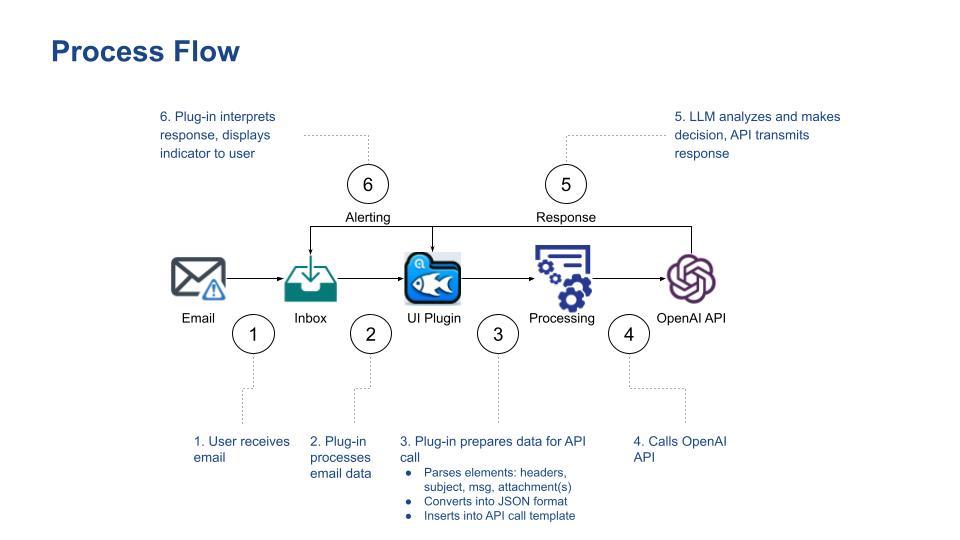
Attackers now use LLMs to generate highly personalized, low-volume phishing emails. These emails avoid the grammar errors and exaggerated urgency that older filters rely on. They reference recent purchases, mimic internal communication styles, and adapt tone to the recipient's role. Because each message is unique or sent to a tiny audience, pattern-matching filters have no prior sample to compare it against.
Modern phishing also doesn't always include a malicious link or attachment. Some attacks use conversation-based lures: the attacker asks the victim to reply, transfer funds to a "new vendor account," or share credentials directly in the thread. There's no URL to blacklist. No attachment to hash. The attack lives entirely in language, which is exactly why AI phishing prevention must be linguistic as well as technical.
Hidden Insight: Temporary Email as the First-Stage Phishing Enabler
One of the most overlooked enablers of modern phishing is the disposable email address. Attackers use temporary mailboxes to register fake domains, create throwaway accounts on legitimate platforms, and verify credentials for phishing infrastructure—all without revealing their real identity. Temporary email verification belongs in any serious conversation about AI phishing prevention because it addresses the attacker's supply chain, not just the final message.
When security teams verify the sender's email address and block known disposable domains, they cut off the attacker's ability to operate anonymously. This layer is straightforward, fast, and surprisingly effective—yet many organizations skip it entirely.
The Shift from Reactive to AI Phishing Prevention
What Proactive Email Threat Detection Really Means

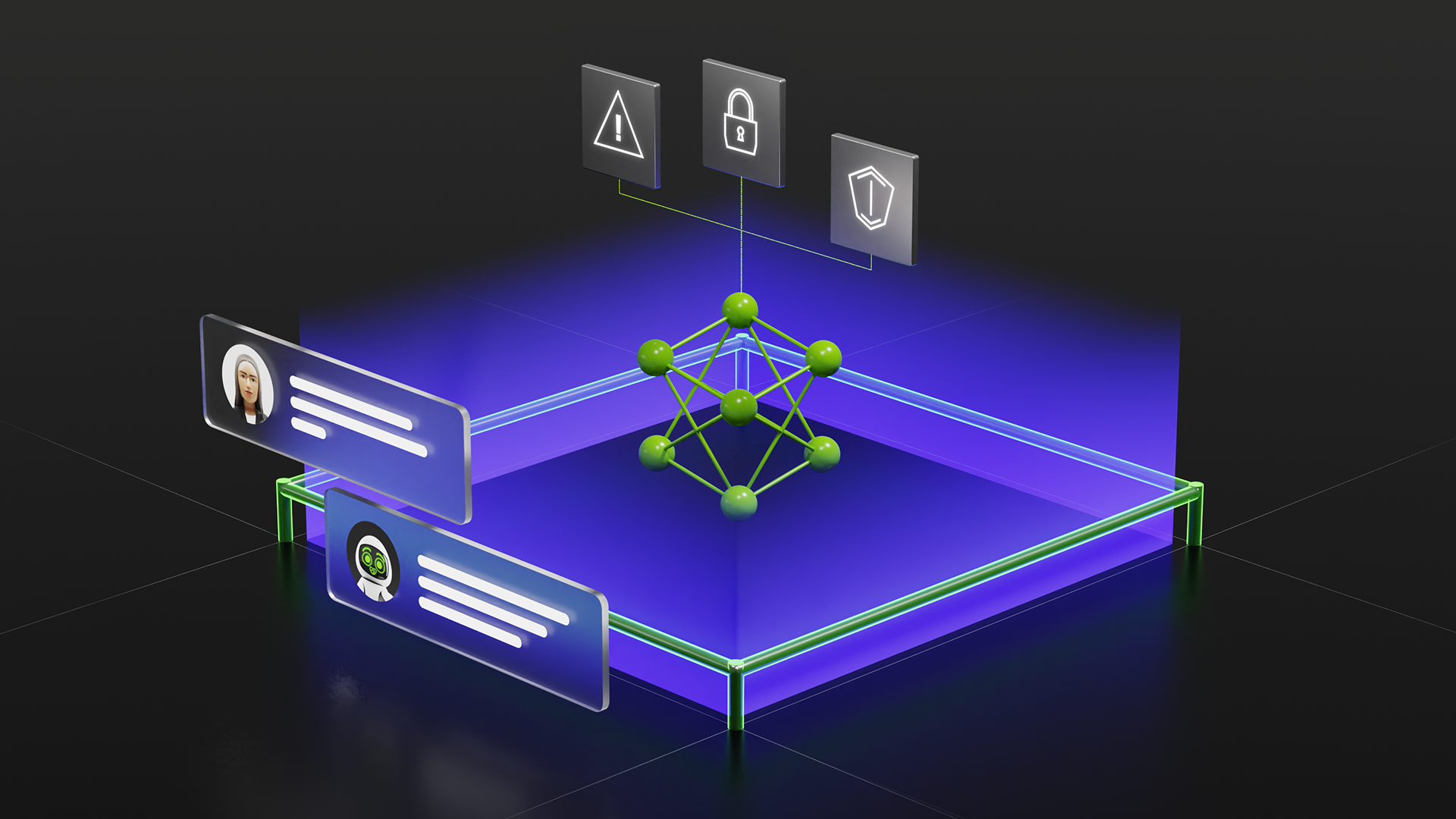
Proactive email threat detection scores threats before delivery, not after a user clicks. Instead of asking, "Have we seen this before?" it asks, "Does this message exhibit intent to deceive?" AI models evaluate the email's language, context, sender identity, and behavioral signals in real time, then assign a risk score that determines whether to deliver, quarantine, or block.
This shift changes the economics of defense. A reactive system improves only after an attack succeeds. A proactive system improves continuously through model training and feedback loops. The goal is to make the first attempt fail.
Why AI Phishing Prevention Starts with Language Understanding
LLMs are uniquely suited for AI phishing prevention because they understand intent. They can detect deceptive cues—excessive urgency, emotional manipulation, requests for credentials, mismatched sender identity—even when the email contains no malicious indicators. This intent-based analysis is far more robust than static rules that can be evaded with a simple rewrite or a synonym swap.
In practice, this means an email that says, "Please verify your account within 24 hours to avoid suspension," gets flagged not because it matches a known template, but because the model recognizes the underlying manipulation pattern. That's a fundamentally different capability from regex rules or reputation lookups.
The Role of LLM Email Security in the Modern Email Stack
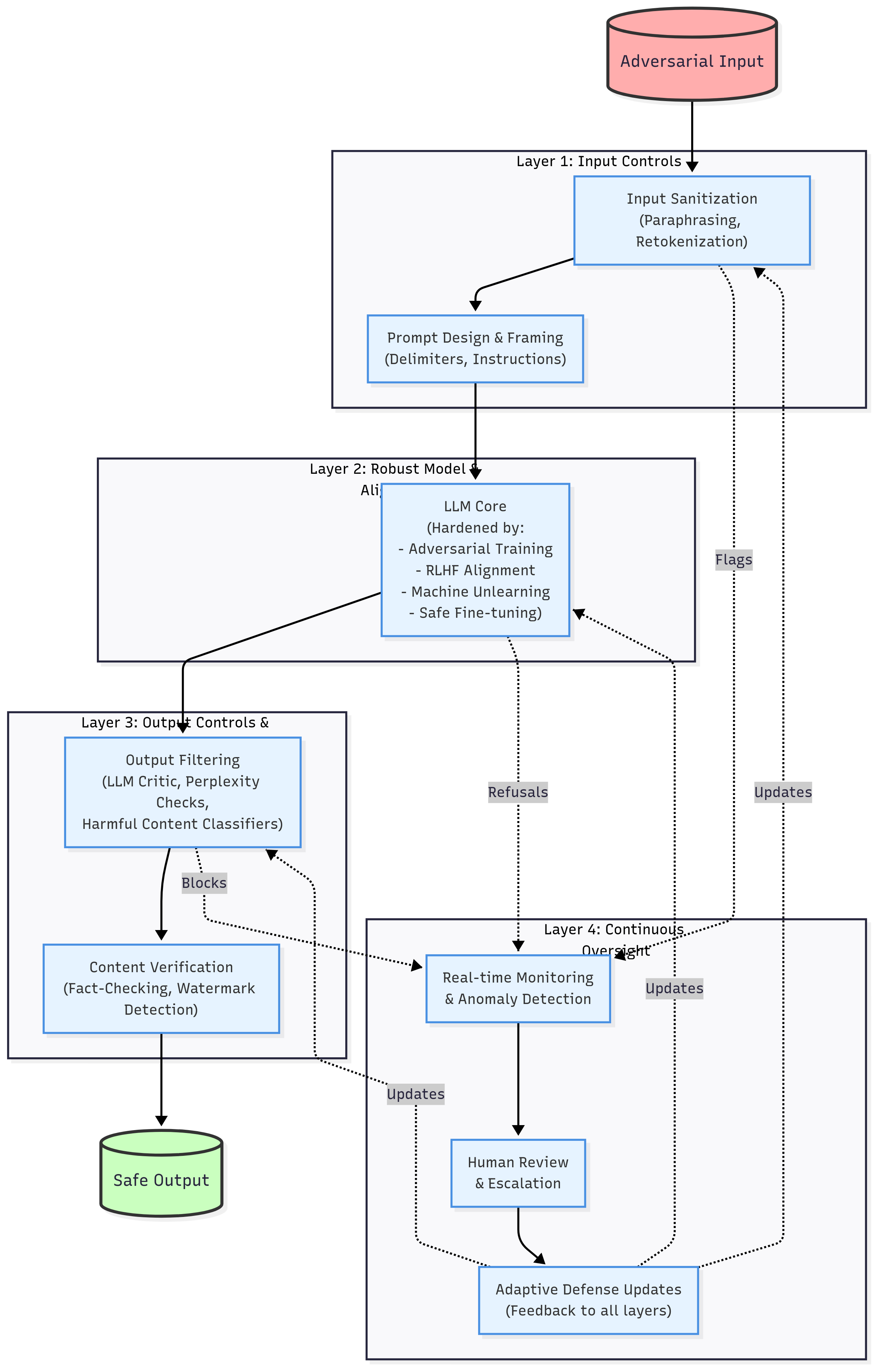
LLM email security is not a replacement for Secure Email Gateways (SEGs). It's a complement. SEGs still excel at attachment sandboxing, URL reputation checks, and protocol-level controls like SPF, DKIM, and DMARC enforcement. But they lack behavioral and linguistic visibility into the message itself. An LLM layer adds exactly that dimension, catching the attacks that slip through rule-based engines. For a broader look at how these layers fit into enterprise architecture, the Cloudflare blog regularly covers real-world email security deployments and the challenges of modern threat landscapes.
Technical Deep Dive: How LLM Email Security Works
Analyzing Language Patterns for Phishing Signals
At the core of LLM email security is semantic analysis. The model examines sentence structure, sentiment, tone, and contextual coherence. It asks questions like: Does the sender's language match their stated identity? Is the request consistent with the recipient's role and history? Does the message create artificial urgency or pressure?
This approach catches what security teams call "low-signal attacks"—phishing emails with perfect grammar, no malicious links, and no known sender reputation issues. The deception is purely linguistic, and only a language-aware model can reliably identify it.
A common mistake is assuming that LLM security requires processing every email from scratch. In most deployments, the model receives pre-extracted metadata and text, runs inference, and returns a risk score. The pipeline is designed for speed, not for open-ended conversation.
Explainable Risk Scores vs. Black-Box Classifiers
Security teams cannot act on a score they don't understand. Black-box classifiers return a 0-to-1 confidence value with no explanation, forcing analysts to take action on faith. That's problematic in high-stakes environments where a wrong decision means either a compromised inbox or a frustrated employee.
Explainable risk scores, such as those provided by AntiTemp, break down the reasoning: "high urgency detected," "sender domain is a known disposable email provider," "language pattern matches credential-harvesting campaigns." This transparency builds trust in the system and accelerates incident response. Analysts can see why an email was blocked, which makes escalation and tuning far easier.
Real-Time API and Batch Processing for Proactive Defense
Deployment architecture matters. Real-time API checks are essential for email gateways that need a decision in milliseconds. Batch processing is useful for retroactive scanning, threat hunting, and compliance audits.
AntiTemp's real-time API delivers sub-500ms responses, making it suitable for inline email filtering where speed is non-negotiable. Its batch processing capability handles large historical datasets, allowing security teams to audit past messages and identify missed threats. Both modes are necessary for a mature AI phishing prevention strategy.
Measuring AI Email Security Accuracy and Latency
Success in AI email security comes down to four metrics: detection accuracy, false-positive rate, latency, and coverage.
- Detection accuracy measures how many phishing emails were correctly identified.
- False-positive rate determines how many legitimate emails were blocked or quarantined.
- Latency impacts the user experience—if the filter takes five seconds per message, it's not viable for real-time use.
- Coverage determines whether the system handles multi-language phishing, low-signal attacks, and novel tactics.
AntiTemp's 95%+ accuracy serves as a realistic benchmark for what modern AI email security should target. Anything significantly lower creates too much noise for security teams to handle.
Implementing Proactive Email Threat Detection in Your Organization
Building a Phishing Prevention Workflow with LLM Signals
A practical phishing prevention workflow follows a clear sequence:
- Extract email metadata (sender, domain, headers, authentication results).
- Verify sender identity—including checking whether the domain is a known disposable email provider.
- Run LLM content analysis to evaluate language-based phishing signals.
- Assign an explainable risk score combining all signals.
- Block, quarantine, or deliver based on policy thresholds.
Sender verification is critical because it catches disposable and impersonated identities before the language model even processes the content. LLM analysis then evaluates the message itself. Together, the two signals provide a strong baseline for automated decisions.
Integrating AI Email Security with Existing Security Tools
API-first design matters. Your AI security layer should integrate with SIEM and SOAR platforms and email gateways through documented APIs. Security teams can then automate response actions—opening a ticket, updating a case, triggering a block—without manual intervention.
If a tool doesn't expose an API, it doesn't belong in a modern security stack. The MITRE ATT&CK framework and OWASP's phishing guidance both emphasize that detection must be integrated into a broader defense ecosystem—standalone tools that don't share signals are of limited value.
Common Pitfalls to Avoid in AI Phishing Prevention
Several pitfalls appear consistently in production deployments.
Model drift occurs when the LLM's baseline becomes stale as attack patterns evolve. Phishing language shifts over time, and a model that isn't retuned will eventually miss new tactics.
Over-blocking happens when the model is too aggressive, generating false positives that frustrate users and erode trust in the security team.
False confidence in LLM outputs leads teams to skip human review entirely. Even powerful models make mistakes. Human-in-the-loop validation remains essential for edge cases.
Poor training data—especially data without recent phishing examples—reduces accuracy. The solution is continuous model tuning, human oversight, and feedback loops that push confirmed results back into the system.
Lessons from Production: Real-World Implementation Scenarios
In practice, three challenges dominate real deployments. High-volume inboxes generate massive traffic, requiring low-latency checks at scale. Multi-language phishing is increasing as attackers use native-language lures tailored to regional teams. And low-signal attacks—those with no malicious indicators—require the LLM to be sensitive enough to flag suspicious intent without raising false alarms.
Each scenario demands a combination of model tuning, verified sender data, and operational processes that humans understand. The Cybersecurity and Infrastructure Security Agency (CISA) publishes practical guidance on phishing defense that reinforces the need for layered controls and continuous validation.
Industry Best Practices for AI Email Security
What the Experts Say About LLM-Based Phishing Defense
Security research consistently points in the same direction: defense-in-depth, human-in-the-loop validation, and layered detection. No single control is sufficient. An LLM layer that flags suspicious language should be combined with identity verification, URL sandboxing, and user awareness training.
This is not just theoretical. The National Institute of Standards and Technology's cybersecurity framework emphasizes detect and respond functions that span multiple layers, and phishing prevention fits squarely within that model.
Aligning AI Phishing Prevention with Compliance and Governance
Privacy regulations add complexity to AI-driven security. GDPR requires data minimization and transparency. If your AI security tool processes email content, you must document what data is processed, why, and how long it is retained.
Explainability obligations also argue for models that provide reasoning rather than opaque black-box decisions. When a security tool blocks an email, the organization may need to justify that decision to a user, a regulator, or a court. Explainable risk scores make this possible. AI-driven security must balance detection power with privacy compliance—a trade-off every organization must address explicitly.
When to Use (and When Not to Use) LLM Email Security
LLM email security is excellent for novel attacks, zero-day phishing, and multi-language campaigns. It excels at detecting manipulation that static rules cannot capture.
But it is not a silver bullet. It won't replace identity verification, URL sandboxing, or user training. A model can flag a suspicious message, but it cannot stop an attacker from using a legitimate-looking disposable domain. For that, you need email verification. Combining LLM analysis with email verification is the strongest approach—and it's exactly what a layered defense looks like in practice.
Building a Layered Defense with AntiTemp
The Case for AI-Powered Email Verification
Verifying the sender's email address closes an entry point that LLM content analysis alone may miss. Attackers rely on disposable identities to launch campaigns anonymously. AntiTemp detects and blocks temporary emails before phishing campaigns take root, cutting off the attacker's supply chain at the earliest possible stage.
This is a straightforward but powerful addition to any security stack. While LLM analysis answers "is this message deceptive?", email verification answers "is this sender real and trustworthy?" Both questions need answers.
Combining LLM Email Security with AntiTemp's Real-Time API
AntiTemp's real-time API and batch processing fit naturally into a proactive email threat detection workflow. The API verifies sender addresses in under 500 milliseconds, flagging disposable domains and risky identities during the pre-delivery check. The batch processor is useful for retroactive audits of historical email traffic, helping teams identify campaigns that evaded earlier defenses.
With explainable risk scores and 95%+ accuracy, AntiTemp gives security teams decision-ready signals they can act on immediately. The sub-500ms response time means verification doesn't slow down email flow, even in high-volume environments.
Performance Benchmarks for Proactive Phishing Protection
When evaluating combined defenses, use a benchmark framework built around detection accuracy, false-positive rate, latency, and coverage. AntiTemp's speed and accuracy metrics provide measurable targets for enterprise security teams evaluating their own defenses.
A layered defense that combines LLM language analysis with sender identity verification is the most reliable path to proactive email threat detection. The content analysis catches the deception; the email verification catches the anonymous identity. Neither alone is sufficient, but together they close the phishing gap in ways that reactive systems never can.
Conclusion
AI phishing prevention is not a single product. It's a layered strategy that combines language understanding, sender verification, and continuous learning. LLM email security adds the intent-based analysis that rule-based systems lack, while temporary email verification closes the identity gap that content analysis misses. Together, they form the foundation of a proactive defense that catches attacks before they reach the inbox.
The threat landscape has changed. Attackers now use AI to craft emails that bypass traditional filters. Defenders must respond with AI of their own—and with the verification layers that make AI phishing prevention genuinely effective.