
Verified, not invited: What Gmail’s political sender program actually says about deliverability

Email Deliverability for Gmail’s Political Sender Program: Why Verification Is Only the First Step
When a political campaign starts sending high-volume email, one of the first things it must handle is Gmail’s political sender program. This program adds an identity verification layer for senders of political content, which sounds like a straightforward checklist. But here is the reality: verification and email deliverability are not the same thing. Verification confirms who you are. Deliverability determines whether your messages actually reach the inbox. Treating verification as a green light to send aggressively is one of the quickest ways to destroy a campaign’s ability to reach voters.
This article walks through what Gmail’s political sender program actually does, why sender verification is not a deliverability guarantee, and how campaigns can build a practical workflow that protects their sender reputation. Along the way, we’ll look at why blocking temporary emails matters more than ever, and how tools like AntiTemp fit into a modern political email operation.
1. Understanding Gmail’s Political Sender Program

1.1 What This Program Is (and What It Is Not)
Gmail’s political sender program is designed to give recipients more transparency about who is behind political messages. For senders, it means going through an identity verification process that proves you are a real organization or campaign with a legitimate basis for sending political content. In practice, that can involve domain verification, policy acknowledgment, and possibly extra authentication requirements depending on how Gmail rolls out the program.
What the program is not is an endorsement. A verified political sender is not a recommended sender. Verification simply tells Gmail, and in turn the recipient, that a particular email came from a source that has identified itself. Gmail still applies its normal spam filters, engagement models, and reputation signals to every single message. If your content looks like spam, or if recipients treat it like spam, verification will not save you.
1.2 Who Needs to Pay Attention

If you manage email for a candidate, a political party, a PAC, a super PAC, an advocacy group, or a ballot measure committee, this program affects you. It also affects agencies and consultancies that send political email on behalf of clients. Even if you send through a platform that handles some of the verification work, your domain and your sending practices still matter.
The program is especially relevant for high-volume senders. If you are only sending a few thousand messages a month, the impact may be limited. But political email often spikes around elections, fundraising deadlines, and major news events. A single campaign cycle can create a giant burst of traffic, and that makes Gmail’s reputation systems much more sensitive to what you do.
1.3 Why This Matters for Email Deliverability
Political email is a unique challenge because it can be polarizing. Recipients may have strong reactions to your message, and those reactions directly influence email deliverability. Gmail tracks how people interact with your emails, and political content tends to generate both passionate replies and angry spam complaints.
This is why email deliverability matters so much for political senders. If your domain gets flagged because recipients mark your messages as spam, the damage can last well beyond a single campaign. Future fundraising appeals, volunteer recruitment emails, and even non-political announcements from the same domain could all land in the spam folder. Verification does not give you a clean slate; it simply puts your identity on the table.
2. Sender Verification: What It Can and Cannot Do

2.1 Sender Verification vs. Inbox Placement

The easiest way to think about sender verification is to compare it to a photo ID. When you show an ID at a polling place, it proves who you are. It does not guarantee that you get to vote early, that your ballot will count first, or that everyone will agree with your choices. Similarly, sender verification proves to Gmail that you are a legitimate political sender. It does not mean that Gmail will place your email in the primary tab, the promotions tab, or even the spam folder.
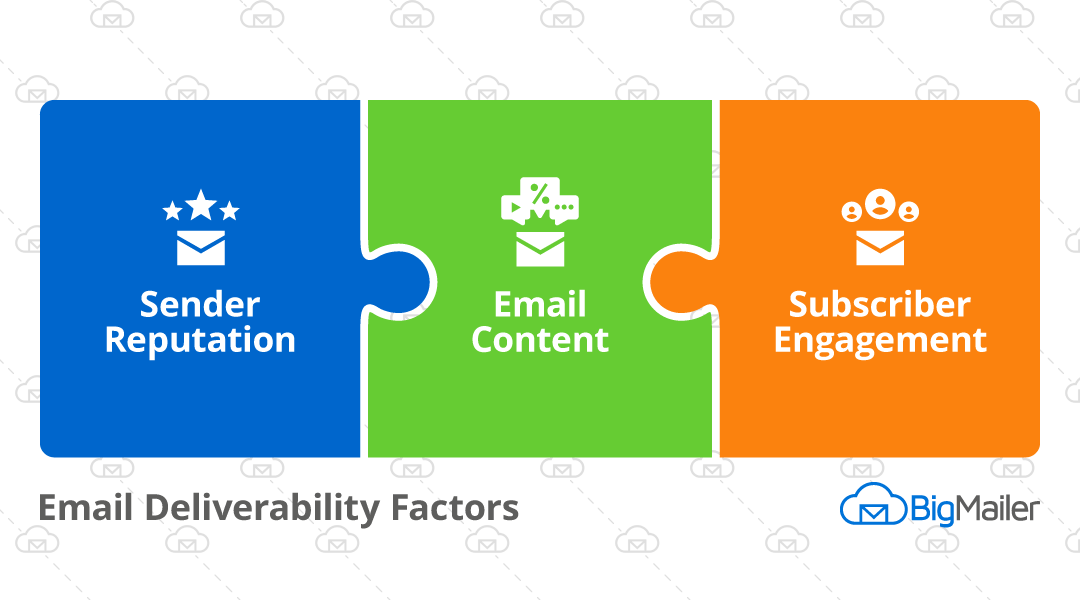
Inbox placement is decided by a completely separate set of signals. Gmail looks at whether recipients open your messages, whether they reply, whether they delete without reading, and whether they click the “Report spam” button. These signals are calculated per sender and per domain over time. A verified sender with a poor track record can still see deliverability fall apart.
2.2 How Gmail’s Political Sender Verification Works Under the Hood

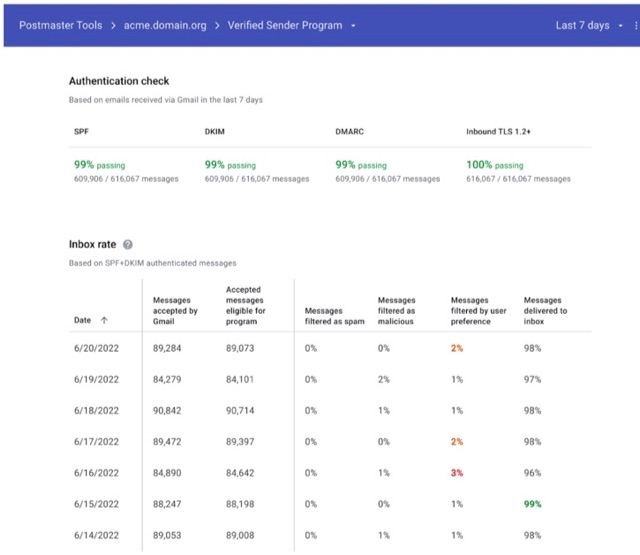
Under the hood, the program relies on standard email authentication mechanisms. You need SPF, DKIM, and DMARC configured correctly, and your sending domain should align with the domain in the From header. Without those records in place, Gmail cannot verify that your messages are genuinely from you. The verification program builds on this foundation by adding political-content-specific checks.
But authentication only answers one question: did this message come from someone authorized to send on behalf of this domain? It does not answer whether the message is wanted. A technically perfect email can still be spam if the recipient doesn’t want it. That distinction is central to every conversation about sender verification and email deliverability.
2.3 Why Sender Verification Alone Won’t Save a Poor Email Deliverability Score

Here is a common mistake: campaigns complete Gmail’s political sender verification and then assume their inbox placement problems are solved. A few weeks later, they wonder why their open rates are dropping and why their messages feel like they are disappearing.
The truth is that sender verification alone cannot override poor email deliverability. If your list is full of old addresses, your complaint rate is high, and your engagement is low, those negative signals accumulate. Gmail begins to see your messages as unwanted, regardless of your verified status. The most robust authentication stack in the world means nothing if recipients keep reporting you as spam.
3. Email Deliverability Beyond Verification: Metrics That Matter
3.1 Spam Complaint Rates: The Metric Gmail Watches Closest
Spam complaints are the most direct signal that recipients do not want your email. Every time someone clicks “Report spam” in Gmail, that is a strong negative signal. For political senders, complaint rates deserve extra attention because politically charged content can trigger an emotional response that leads to spam reports even from subscribers who originally opted in.
In practice, many deliverability teams treat 0.1% as a practical target for complaint rates. Once that number climbs, Gmail may start routing more messages to spam. The best way to keep complaints low is to make sure your content matches subscriber expectations, you are not over-messaging, and you make unsubscribing easy. Verification cannot reduce complaint rates; only audience management and content can do that.
3.2 Engagement Signals: Opens, Replies, and Positive Actions
Beyond complaints, Gmail pays attention to engagement. Opens matter, but replies matter even more because they prove a real human is interacting with your message. Marking an email as important, moving it out of spam, adding a sender to contacts, and clicking links all count as positive engagement signals.
Disengaged subscribers are dangerous. If a large segment of your list ignores your messages for months, Gmail sees that as a sign that your content is not relevant. Over time, this drags down your overall email deliverability, including for subscribers who actually want to hear from you.
3.3 Bad Data: How Invalid and Temporary Emails Destroy Deliverability
Nobody starts a campaign with a bad list on purpose. But lists grow through many channels, and bad data sneaks in. Some addresses are simply outdated. Others are invalid from the start. And a surprisingly common problem is the temporary email address.
Disposable email addresses, often provided by services that let anyone create a short-lived inbox, are toxic to political lists. They inflate your list size, create fake signups, and generate hard bounces that hurt your sender reputation. Even if a temporary email address passes basic authentication checks, it contributes nothing to engagement. This is where AI-powered email verification becomes essential. AntiTemp is a good example of a solution that detects and blocks temporary emails before they contaminate a campaign list. It gives senders an explainable risk score for every address, so you know exactly why an address was flagged.
4. Why Blocking Temporary Emails Is Essential for Political Sender Programs
4.1 Temporary Emails Undermine Sender Verification
A temporary email address can be technically valid. It might have a working domain and a mailbox that accepts messages. It might even pass SPF and DKIM checks when the recipient domain is configured properly. But temporary emails do not represent real voters, real donors, or real volunteers. They represent noise.
When temporary emails are on your list, they add neutral or negative signals to your sender reputation. Since they rarely engage, they lower your engagement rates. If they bounce later, they increase your bounce rate. Over time, these addresses drag down the accuracy of your outreach data, making it harder to measure actual voter sentiment and campaign performance.
4.2 The Political Risk of Fake Signups
Political campaigns rely heavily on petitions, event registrations, volunteer signups, and newsletter subscriptions. These forms are perfect targets for abuse. An individual who wants to distort campaign data can submit hundreds of fake signups in a few minutes using temporary email addresses.
This is not just a data quality issue. Fake signups waste resources. They clutter your CRM, inflate your costs if you pay per contact, and make your analytics unreliable. Worse, they can trigger deliverability problems because the addresses are effectively dead weight. A clean list starts with blocking temporary emails at the point of capture, not trying to clean up the mess months later.
4.3 Using AI-Powered Verification to Block Temporary Emails
The most effective way to block temporary emails is to use an AI-powered verification service that understands the patterns behind disposable email domains. AntiTemp is designed for exactly this use case. It offers a real-time API that can check an address during signup, a batch processing option for cleaning existing lists, and explainable risk scores that tell you why a given address is considered temporary or risky.
AntiTemp claims 95%+ accuracy and response times under 500 milliseconds, which means you can run verification at the point of capture without adding noticeable friction to your signup forms. This is the kind of tool you need if you want to block temporary emails before they ever become part of your voter outreach data.
5. A Sender Verification Workflow for Better Political Email Deliverability
5.1 Verify New Subscribers at the Point of Capture
The first and most important step in any political email workflow is to verify new subscribers before they enter your list. Use a real-time API check on your signup forms to block temporary email addresses immediately. This combines sender verification with practical list hygiene.
When a supporter submits a petition or signs up for your newsletter, the signup request can be sent to a service like AntiTemp in the background. If the address is flagged as temporary, you can reject the signup, ask for a different email, or send it to a manual review queue. Doing this at the point of capture is far cheaper and more effective than trying to remove bad records after a campaign launch.
5.2 Authenticate Your Domain Like a Serious Sender
No amount of list hygiene will save a domain that is not authenticated correctly. Before you send a single political email, set up SPF and DKIM records, then configure DMARC to enforce alignment. Your From domain should match your authenticated domain so that Gmail can connect the message to your verified identity.
Authentication failures can cancel out otherwise good email deliverability. If your DKIM signature fails or your SPF record is incomplete, trust is lost immediately. You can verify your authentication settings with free tools like MXToolbox or Google’s Postmaster Tools, but the real test is whether every message passes all checks before it leaves your sending platform.
5.3 Segment and Re-verify Existing Lists
A brand-new list is easy to keep clean. Existing lists are where the problems hide. Before any major campaign moment, segment your list by engagement level and run batch processing on older records to remove role accounts, spam traps, and disposable addresses that accumulated over time.
Batch verification through a tool like AntiTemp allows you to process thousands of addresses at once. You can then remove or quarantine any address with a high risk score. Re-verification is especially important after long idle periods, because people abandon email addresses faster than you think.
5.4 Monitor Gmail’s Complaint Thresholds
The final part of the workflow is continuous monitoring. Watch your spam complaint rate, hard bounce rate, and unsubscribe rate every time you send a campaign. If complaint rates start climbing, you need to adjust your content, frequency, or audience targeting immediately.
Early detection is critical. A small complaint increase can be a warning sign. Ignoring it can lead to a reputation collapse that takes months to repair. Console dashboards in your email service provider and Gmail Postmaster Tools will give you the data you need.
6. Real-World Lessons from Political Email Campaigns
6.1 What “Verified” Campaigns Still Get Wrong
The biggest mistake verified campaigns make is treating verification as permission to send more. I have seen campaigns push their email frequency from a few messages a week to several messages a day because they thought a verified badge meant they were safe. It did not take long for complaint rates to spike and inbox placement to drop.
Another mistake is ignoring content relevance. If a donor gives to a candidate because of environmental policy, they do not want to receive five emails a day about tax reform. Political senders often assume that every subscriber cares about every issue, but that simply is not true. Relevance is an email deliverability factor because engagement is measured per message, not per campaign.
6.2 Common Pitfalls to Avoid in Political Email Deliverability
Political email has its own set of recurring problems. Purchased lists are one of them. No matter how tempting it is to buy a list of registered voters, those contacts have not agreed to receive your email. The result is high spam complaints and poor engagement.
Recycled data is another pitfall. Using a list from a previous campaign without re-permissioning can be a disaster because the context of the relationship has changed. And of course, not blocking temporary emails at the source is a classic error. Fake signups waste resources and contaminate your data, so temporary email filtering should be a standard part of your acquisition strategy.
6.3 Lessons from Production: Speed, Accuracy, and Explainability
When you protect a political list in production, speed and accuracy matter equally. If your signup form takes too long because of a verification API, you will lose real supporters. That is why response times under 500 milliseconds are so valuable. A background check that runs quickly does not hurt the user experience.
Accuracy is also crucial. You do not want to block real voters because of a false positive. Explainable risk scores, like the ones AntiTemp provides, let your team see exactly why an address was flagged. Instead of a black box, you get a clear answer: “this address appears on a list of known temporary domains” or “this address pattern matches disposable email behavior.” That visibility makes it easier to tweak your rules and maintain trust in your data.
7. Pros, Cons, and the Future of Gmail’s Political Sender Program
7.1 Advantages of Gmail’s Political Sender Program
The political sender program has clear benefits. It increases transparency for recipients, who can now see who is responsible for a political message. It also creates accountability, since verified senders are more likely to follow the rules. For legitimate campaigns, having verified status can be a signal of credibility.
| Advantages | Limitations |
|---|---|
| Increased transparency for recipients | No guarantee of inbox placement |
| Accountability for political senders | No protection from spam complaints |
| Baseline of identity assurance | Does not solve list hygiene problems |
| Helps platforms enforce policy | Requires ongoing compliance effort |
7.2 Limitations Senders Must Understand
The limitations are important to internalize. A verified sender can still be marked as spam. A verified sender can still see poor email deliverability if engagement is low. Verification is a floor, not a ceiling. It gives you a chance to prove that you are legitimate, but it does not protect you from the consequences of bad behavior.
If you ignore spam complaints, send to unengaged subscribers, or allow temporary email addresses into your list, your sender reputation will still suffer. The political sender program does not override Gmail’s broader spam filter. It simply adds one more layer of identity assurance.
7.3 How Verification and List Hygiene Will Evolve Together
As Gmail tightens requirements for political senders, the combination of sender verification and list hygiene will become even more essential. Verification alone will not be enough. Senders who treat email deliverability as a continuous quality process will be the ones whose messages consistently reach the inbox.
That means doing more than authenticating your domain. It means verifying every new subscriber, cleaning old lists, blocking temporary emails, and watching your metrics like a hawk. Tools like AntiTemp will play a growing role in this ecosystem because they address the specific problem of fake and disposable addresses that traditional verification does not catch.
The future belongs to political senders who understand that verification is not a badge to earn and forget. It is a starting point for a longer-term commitment to good email deliverability. By combining identity verification with active list hygiene and engagement monitoring, campaigns can build the kind of sender reputation that survives election cycles and continues to work long after the votes are counted.